Phase 1 Complete · Operational Since 2020
Food Is Infrastructure.
Ownership of land, production, and distribution.
Six parcels built. Roads, warehousing, and livestock infrastructure operational. Now scaling into Phase 2.
8,000
Total Acres
6
Parcels Built
$7M
Phase 2 Raise
8,000
Acres
7
Divisions
1,500
Pivot Acres
400K
Mango Trees
32.5K
Palm Trees
4,000
Breeding Females
Strategic Positioning
Engineered for Control.
A vertically integrated agricultural platform built on owned land, controlled infrastructure, and internal production systems. We are not operating a single farm. We are building scalable food infrastructure.

Asset-Backed Ownership
Owned land and infrastructure provide hard-asset downside protection and long-term equity compounding. Direct ownership anchors value independent of market cycles.
Closed-Loop Control
Water, feed, energy, and production are internalized to reduce dependency and stabilize operating margins. What others outsource, we own.
Global Pricing Power
Direct export relationships support USD-linked revenue and reduce local currency exposure. Control of distribution protects pricing power.
Institutional Transparency
Every investor receives real-time visibility through an enterprise-grade ERP platform (Odoo). All transactions are recorded digitally, auditable in real time, and accessible through a cashless operating model.
Engineered Risk
Risk is not diversified here. It is engineered out at the system level. Land ownership, vertical integration, and closed-loop operations eliminate structural weaknesses.
Why Now
Fragile Supply Chains
Global supply chains are fragile. When they break, food pricing becomes volatile and political.
Finite Arable Land
Arable land is finite. Demand continues to rise, but land cannot be manufactured.
Rising Protein Demand
Protein demand is accelerating worldwide, driven by population growth and rising consumption.
Currency Volatility
Currency volatility erodes agricultural returns when revenue is local and costs are global. Hard assets outperform in uncertain cycles.
Food is no longer a commodity. It is strategic infrastructure.
Phase 1 Complete
Already Built.
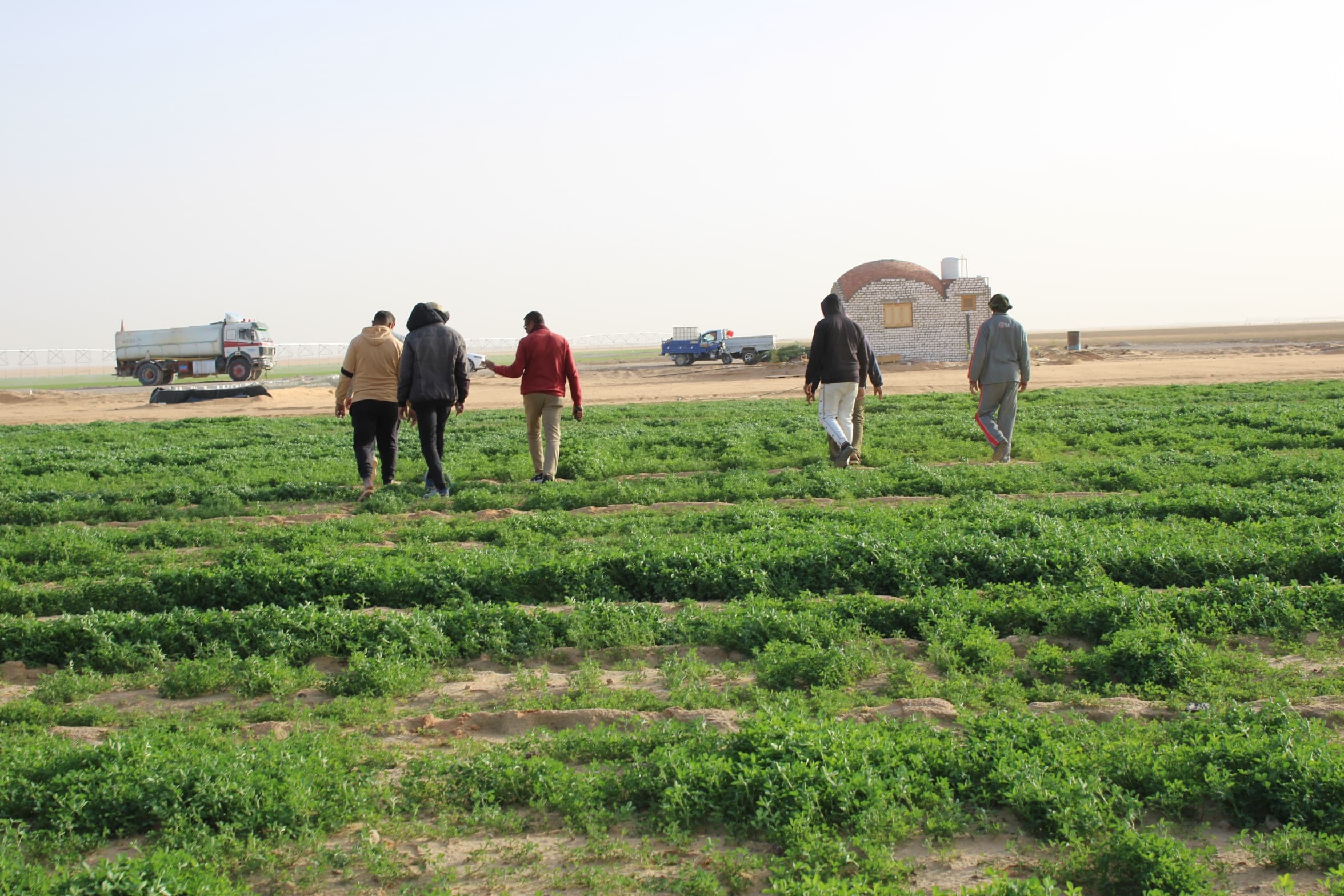
Phase 1 is fully executed. Six parcels at 235 acres each: warehousing, roads, and livestock bins built from raw desert. Phase 2 scales what already exists rather than starting from scratch.

6 Parcels · 1,410 Acres Developed
Phase 1 delivered six parcels at 235 acres each. Full infrastructure executed: warehousing, internal roads, and livestock bins, all built from raw desert.
Water & Power Systems
Wells and hybrid power systems operational. Water and energy infrastructure active and supporting execution on the ground.
Systems Live
Operational and financial systems provide real-time visibility through enterprise-grade ERP (Odoo). 100% digital, cashless, auditable.
Local Teams Active
On-ground teams executing daily operations. Agricultural engineers averaging 15–25 years field experience.
Investment Security
Land-Backed. Vertically Integrated.
Asset-Backed Security
Owned land and infrastructure provide hard-asset downside protection through land, infrastructure, and equipment ownership.
Transparent Governance
Enterprise-grade ERP (Odoo) centralizes reporting, controls, and audits. Cashless operations ensure every transaction is traceable and verifiable. 24/7 investor access.
Water Security
Positioned directly above the Nubian Sandstone Aquifer System, one of the world's largest underground freshwater reserves. Water scarcity is structurally eliminated.
Operational Independence
Owned heavy equipment, internal feed production, and controlled energy systems eliminate third-party dependencies. What others rent, we own and monetize.
Vertical Integration
Land produces feed. Feed powers livestock. Livestock and crops move into processing. Processed goods move to export. Every layer reinforces the next.
The Platform
Seven Integrated Divisions.

Land
The non-replicable foundation. 8,000 acres secured through government-backed allocation. Hard asset ownership anchors long-term value and appreciation.

Agriculture
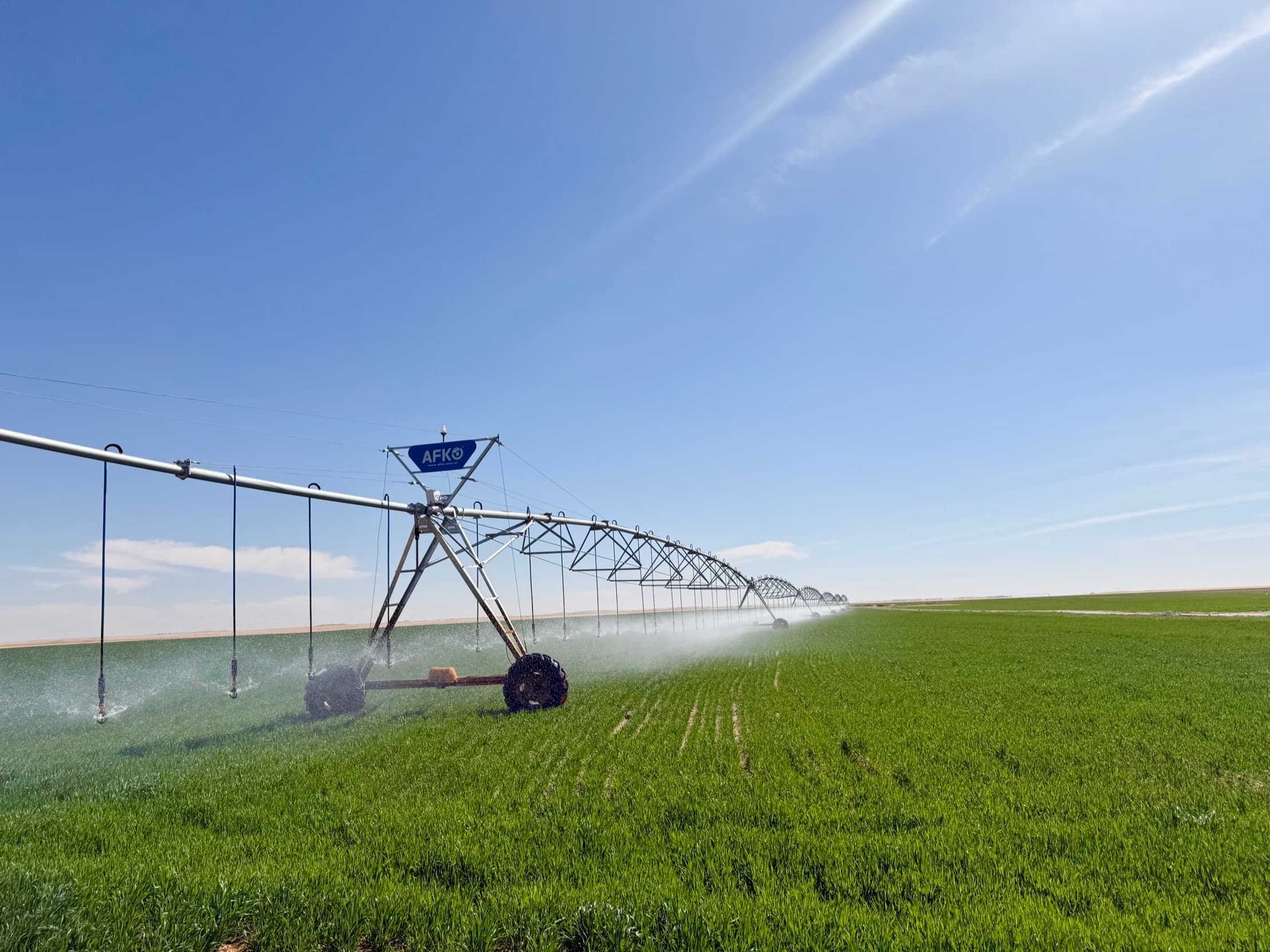
1,500 acres under central pivot irrigation. 400,000 mango trees across 1,000 acres of export-grade orchards. 32,500 date palm trees across 500 acres. Alfalfa and Azolla feed production active. Dual purpose: internal feed supply and direct export revenue.

Livestock
4,000 breeding females producing ~20,000 lambs annually. Recurring biological production with immediate revenue cycles. Internal feed from on-site crop production reduces input costs.

Manufacturing
Cleaning, sorting, grading, drying, and feed pellet production. Packaging for export standards. Shifts the model from raw producer to value-added supplier.

Import & Export
Direct market access to international buyers. USD-linked export contracts protect against currency risk. Reduced intermediary dependency strengthens margin integrity.

Machinery & Services
Owned heavy equipment for well drilling, land preparation, and agricultural operations. Eliminates contractor dependency. Excess capacity generates external contract revenue.

Housing & Agritourism
On-land residences for shareholders at no cost. Managed rental income from visitor accommodations. Asset enhancement through select development on productive land.
Land → Feed → Livestock → Processing → Export → Retained Earnings → Expansion
Disconnected farms chase markets. Integrated platforms control them.
Research & Development
Advancing Agricultural Science.
Azolla Feed Innovation
Systematic Azolla cultivation as scalable, high-protein livestock feed. Fast-regenerating, low-water, pellet-compatible.
Desert Yield Optimization
Soil response mapping, water-use efficiency analysis, crop density performance tracking. All active across 8,000 acres.
Renewable Energy Integration
Solar-diesel-wind hybrid systems operational. Inverter load management deployed. Renewable transition roadmap in development.
Livestock Feed Formulation
Azolla-based and alfalfa-based feed formulas optimized for sheep nutrition. Feed conversion analysis and growth-rate trials active.
Historical Context
Why Food Matters.
For thousands of years, control of food production has defined economic strength and political stability. Major empires treated fertile land as strategic infrastructure because food security underpinned economic expansion and fiscal stability. The lesson remains consistent: ownership of productive land and food systems provides leverage over pricing, supply, and long-term resilience.

The Shift
Global food systems are shifting from commodity markets to strategic infrastructure. Those who own land, production, and distribution set terms. Those who don't absorb risk.
The Opportunity
Control is the differentiator. Arable land is finite and cannot be manufactured. Protein demand is accelerating worldwide. Hard assets outperform when financial assets reprice.
Food is no longer a commodity. It is strategic infrastructure.
Risk Mitigation
Engineered Security.
Asset-Backed
Hard assets provide downside protection through land, infrastructure, and equipment ownership.
Diversified
Multiple revenue divisions reduce reliance on any single crop, buyer, or market.
Closed-Loop
Internal control of feed, water, energy, and processing protects against supply chain shocks.
Real Estate
On-land housing assets add tangible value and alternative income streams.
Risk is not avoided. It is engineered out.
Location
Egypt's New Valley.

Strategically positioned in Egypt's New Valley, one of the region's most promising agricultural development zones, with direct access to one of the world's largest underground freshwater reserves.
8,000
Total Acres
7
Integrated Divisions
2020
Platform Established
Macro Opportunity
Why Egypt. Why Now.
Egypt is the largest consumer market in the Arab world, with a young, fast-growing population, strategic access to three continents, and an agricultural sector expanding through government-backed land reclamation programs. For hard-asset investors, the convergence of demand, policy support, and fertile land is rare.
111M+
Population
60%
Under Age 30
12%
Global Trade via Suez
3
Continents Within Reach
Domestic Demand
A growing middle class and the largest population in the Arab world drive sustained demand for protein, produce, and processed food.
Strategic Location
Gateway to Africa, the Middle East, and Europe. The Suez Canal places Egyptian exports hours from major global markets.
Policy Tailwinds
National food security is a government priority. Land reclamation and agricultural investment programs open access to controlled, productive land at scale.
Hard-Currency Revenue
Export contracts priced in USD and EUR protect returns from local currency volatility and align with global pricing power.
Impact
Beyond Profit.
Food Security
Strengthens Egypt's domestic feed and protein supply.
Export Growth
Foreign currency revenue through export-grade produce and processed products.
Regional Employment
Agricultural and operational jobs in Egypt's New Valley.
Sustainable Agriculture
Solar, wind, and precision water reduce environmental strain.
Desert Transformation
Proving Egypt's desert can become high-value agricultural land at scale.
Vertical Value Creation
Every layer of production captures margin and compounds equity for all stakeholders.
Shareholder Living
On-Land Residences.
Residential and visitor accommodations developed on productive land to enhance long-term asset value. Shareholders receive a private on-land residence at no cost, subject to availability.
Private Residence
No-cost use for shareholders
Rental Income
Managed visitor accommodations generate passive revenue
Asset Enhancement
Select development on productive land strengthens overall value
Productive land first. Development second.

Investor Questions
Frequently Asked Questions.
A $50,000 investment secures direct equity ownership in BlackFarms. You own a pro-rata share of land, livestock, irrigation infrastructure, orchards, and all operating assets. At $3.50 per share, $50,000 purchases 14,286 shares representing 0.1428% ownership, equivalent to approximately 11.42 acres of productive land.
Founder
Meet the Founder.

Moe Sayed
CEO & Owner
Serial entrepreneur, 18 years NYC real estate. Agile methodology applied to every business he builds. Leads BlackFarms with investor structuring expertise and capital strategy.
Agricultural engineers averaging 15–25 years field experience. Full-time sales division for domestic and international contracts.

Ownership Is the Decision.
Secure a stake in a vertically integrated, asset-backed agricultural platform. Invest in land, production, and long-term value.
Get In Touch
Start the Conversation.
Charitable Impact
Giving Back Locally.
BlackFarms partners with local nonprofits in Egypt to distribute food, livestock, and agricultural products to communities in need. From Qurbani during Eid to year-round food aid, our production directly supports charitable programs on the ground.
Qurbani & Udhiyah
Livestock raised on BlackFarms land distributed to families during Eid through nonprofit partners.
Food Aid
Farm produce and staples distributed to local communities year-round.
Zakat & Sadaqah
Structured giving channels through partner nonprofits.
Direct From Source
No middlemen. Product goes from the farm to families through trusted local organizations.
Contributions made through our 501(c)(3) nonprofit partners may qualify as tax-deductible charitable donations. Consult your tax advisor for details.